
MongoDB
MongoDB
As a popular NoSQL database, MongoDB offers a flexible and scalable solution for handling both structured and unstructured data. Proficiency in MongoDB development is crucial for managing data in modern web and mobile applications.Skilled MongoDB professionals can design and implement robust database solutions, optimize performance, and ensure data integrity and security.
| Duration | 1 Week | Class Hours | 1 hour/day |
| Lab Hours | 1 hour/day | Prerequisite | Basic computer knowledge |
| Certificate | After successful completion of training | Trainer | Industry Experienced Mentor |
| Study Material | Books, Notes and Online Tests | Online Test | Unlimited |
| Project | Yes | Lectures In | English / Hinglish / Hindi |
| Fees | Please Call | Placement Support | No |
| Complimentary | Laptop Bag and T-Shirt | ||
About MongoDB
A Simple Comparison of MongoDB with RDBMS
| MongoDB | RDBMS |
|---|---|
| Non-Relational database | Relational Database |
| Document Based | Row Based |
| Field Based | Column Based |
| Collection Based | Table Based |
| JavaScript Based client for querying | No built-in client available |
| Near immune to SQL Injection | Easily affected by SQL Injection |
| It has Dynamic Schema | Pre-defined static schema |
| Easy for hierarchical data storage | Difficult for hierarchical data storage |
| Horizontally scalable | Vertical scaling is possible |
These skills are valuable for roles such as database administrators, data engineers, and developers dealing with large-scale data sets. Mastering MongoDB opens up numerous career opportunities, as its flexibility and scalability make it ideal for managing user profiles, processing real-time data, and analyzing customer behavior in today’s data-driven landscape.
Following Key Topics to Cover in MongoDB Database-
6 Modules · 1 Week
-
- Overview of NoSQL Database Concepts
- Types of NoSQL Databases
- Advantages of NoSQL over Traditional RDBMS
- Introduction to MongoDB
-
- Installation and Configuration
- Working with MongoDB Shell
- CRUD Operations (Create, Read, Update, Delete)
- Querying Data with MongoDB
-
- Indexes and Query Optimization
- Aggregation Framework
- Schema Design and Data Modeling
- Transactions and Atomicity
-
- Security and Authentication
- Backup and Recovery Strategies
- Performance Monitoring and Tuning
- Scaling MongoDB Deployments
-
- Integration with Programming Languages (Node JS, Python, etc.)
- Integration with Frameworks (Express.js, Flask, etc.)
- Working with MongoDB Atlas (Cloud Database Service)
- Real-time Data Integration Techniques
-
- Geospatial Queries
- Text Search
- Change Streams and Event-Driven Architecture
- Security Best Practices for MongoDB
Mastering corporate MongoDB development equips individuals to design, implement, and manage scalable and flexible database solutions. This curriculum covers core MongoDB concepts, advanced features, administration tasks, integration techniques, and security best practices. By understanding these topics, you can contribute effectively to MongoDB projects and enhance your career prospects in the database management field.
Why Should a Student or Professional Learn MongoDB ?
- Data Management: MongoDB skills are essential for managing and manipulating data efficiently in modern web and mobile applications.
- Career Opportunities: Proficiency in MongoDB development opens up numerous career opportunities in database administration, data engineering, and software development.
- Scalability and Flexibility: MongoDB's flexible data model and scalable architecture make it well-suited for a wide range of use cases and industries.
- Business Innovation: MongoDB enables organizations to leverage their data effectively for real-time analytics, personalized experiences, and business innovation.
Whether you're a student looking to build a strong foundation in database management or a professional seeking to enhance your data skills, learning corporate MongoDB development is a valuable investment that can lead to significant career growth and opportunities.
Interesting Facts
MongoDB is a popular open-source NoSQL database known for its flexibility, scalability, and ease of use. It stores data in a document-oriented format, making it well-suited for handling complex data structures. Here are some interesting facts about MongoDB:
1. Document-Oriented Database
Flexible Schema
MongoDB uses a document-oriented data model where data is stored in JSON-like BSON (Binary JSON) format. This schema-less design allows for flexible and dynamic data structures, making it easy to adapt to changing requirements.
2. High Scalability
Horizontal Scaling
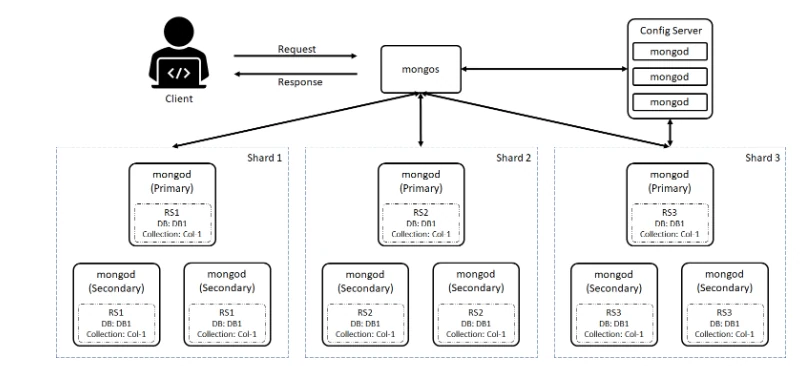
MongoDB is designed for horizontal scalability through sharding, which distributes data across multiple servers. This architecture allows MongoDB to handle large volumes of data and high traffic loads efficiently.
3. Rich Query Language
Powerful Queries
MongoDB provides a rich query language that supports a wide range of query operations, including filtering, sorting, and aggregating data. It also supports complex queries using its aggregation framework.
4. Built-In Replication
Data Redundancy
MongoDB includes built-in replication through replica sets, which provide high availability and data redundancy by maintaining multiple copies of data across different servers.
5. Indexing Capabilities
Enhanced Performance
MongoDB supports various types of indexes, including single field, compound, geospatial, and text indexes, which enhance query performance and optimize data retrieval.
6. Aggregation Framework
Advanced Data Processing
MongoDB’s aggregation framework provides powerful tools for data analysis and processing. It allows for complex data transformations, aggregations, and computations using a pipeline-based approach.
7. Schema Validation
Enforcing Rules
MongoDB allows for schema validation by defining rules and constraints for document structure, ensuring data consistency and enforcing certain data formats or requirements.
8. Real-Time Data Processing
Immediate Updates
MongoDB’s support for real-time data processing enables applications to handle and process data as it arrives, making it suitable for applications requiring immediate feedback or updates.
9. Community and Ecosystem
Vibrant Community
MongoDB benefits from a large and active community of developers and users, contributing to a rich ecosystem of tools, libraries, and extensions that enhance its functionality and integration.
10. Cloud Integration
MongoDB Atlas
MongoDB offers a fully-managed cloud service called MongoDB Atlas, which provides automated backups, scaling, and security features, allowing users to deploy and manage MongoDB databases in the cloud with ease.
Training Program Fee
Get Personalized Career Guidance
Our admissions team specializes in helping students choose the right career path for their goals.